
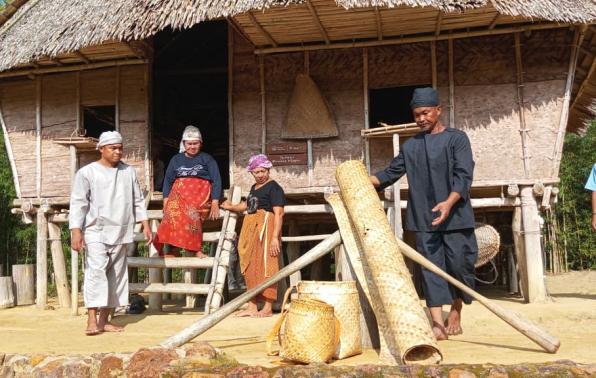
Bangka — The community of Air Abik Hamlet, Gunung Muda Village, Belinyu District, Bangka Regency, once again held the Nujuh Jerami customary tradition on Wednesday, 29/4/2026. This annual event is a form of gratitude expression by the Lom or Mapor Tribe for a bountiful rice harvest.
The meaningful traditional ritual was led directly by the tribe’s chief, Abok Gedoi. The solemn procession involved local residents as well as various government elements and stakeholders.
The event was attended by the regent of Bangka, Fery Insani, along with deputy regent Syahrudin, representatives from PT Timah, Bank Indonesia, as well as civil servants from the provincial and regency Tourism, Culture, Youth, and Sports (Disparbudkepora) Office. Also present were members of the Regional Leaders Communication Forum (Forkopimda), village apparatus, traditional leaders, and community figures.
In his speech, Fery Insani emphasized the importance of maintaining and preserving customary traditions as part of the community's identity and character.
“Customs shape our character. Keep preserving the tradition, including protecting the environment. There are not many villages that are still performing this kind of tradition. We are very proud of the Air Abik community,” he said.
He also appreciated the environmental condition of the Village, which he considered clean and well-maintained, and expressed his gratitude to all parties who have supported the event. According to him, the tradition like Nujuh Jerami needed to continue to be developed in order to remain alive among the community.
Meanwhile, the representative of provincial Disparbudkepora, Sukardi, said that this event proved the living local wisdom in modern society.
“It is not merely a ceremony or traditional ritual, but it contains wise messages from the past about the management of natural resources and ecosystems. These values are still well preserved in the land of Abik Mapur,” he explained.
The tradition not only serves as a symbol of gratitude but also strengthens togetherness and maintains a harmonious relationship between humans, nature, and culture. It is expected to serve as an inspiration for other regions in preserving local cultural heritage.